
CDA Issues Strict New Rules for Plot Allotments and Housing Scheme Approvals in Islamabad
The Capital Development Authority (CDA) has officially strictly enforced new regulatory frameworks governing private housing schemes, plot allotments, and layout approvals across the Islamabad Capital Territory (ICT). In a major move aimed at safeguarding public investment and eliminating fraudulent real estate practices, the civic body has made it mandatory for all private housing societies to get their plot allotment letters vetted and verified by CDA before any sale or property transfer can proceed.
Mandatory CDA Vetting to Eliminate Overselling Fraud
A persistent issue in Islamabad's private real estate sector has been over-invoicing and overselling—where housing developers sell more plot files than the physical land they actually hold. Additionally, several developers have illegally converted amenity lands (reserved for parks, mosques, and schools) into residential or commercial plots.
To curb these malpractices, CDA's Planning Wing has established strict new verification criteria:
Under this enforced structure, no private housing society in Zones 2, 4, or 5 can execute a valid sale deed or transfer letter without direct CDA involvement. The authority will physically cross-verify whether the specific plot genuinely exists within the project's officially approved Layout Plan (LOP) before granting approval.
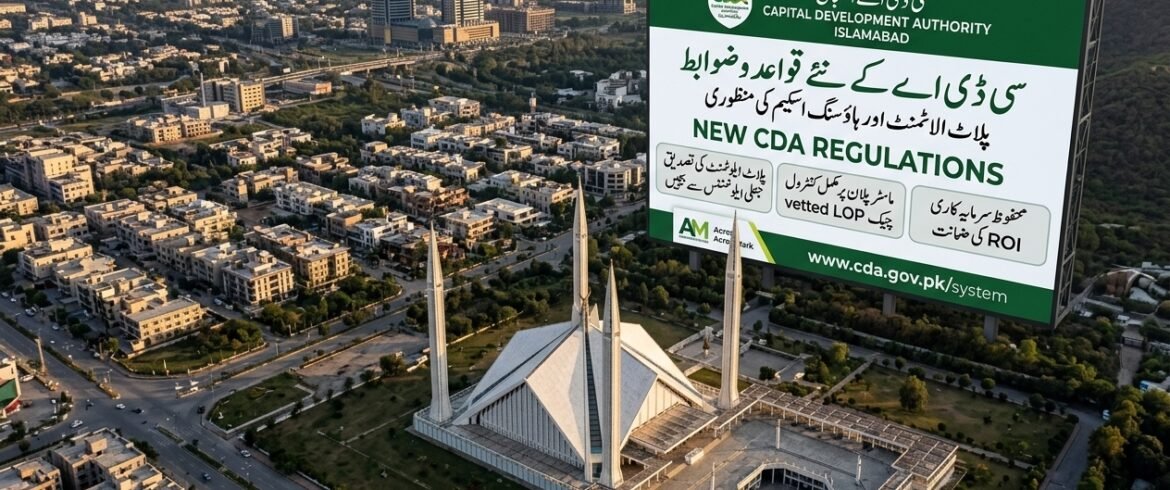
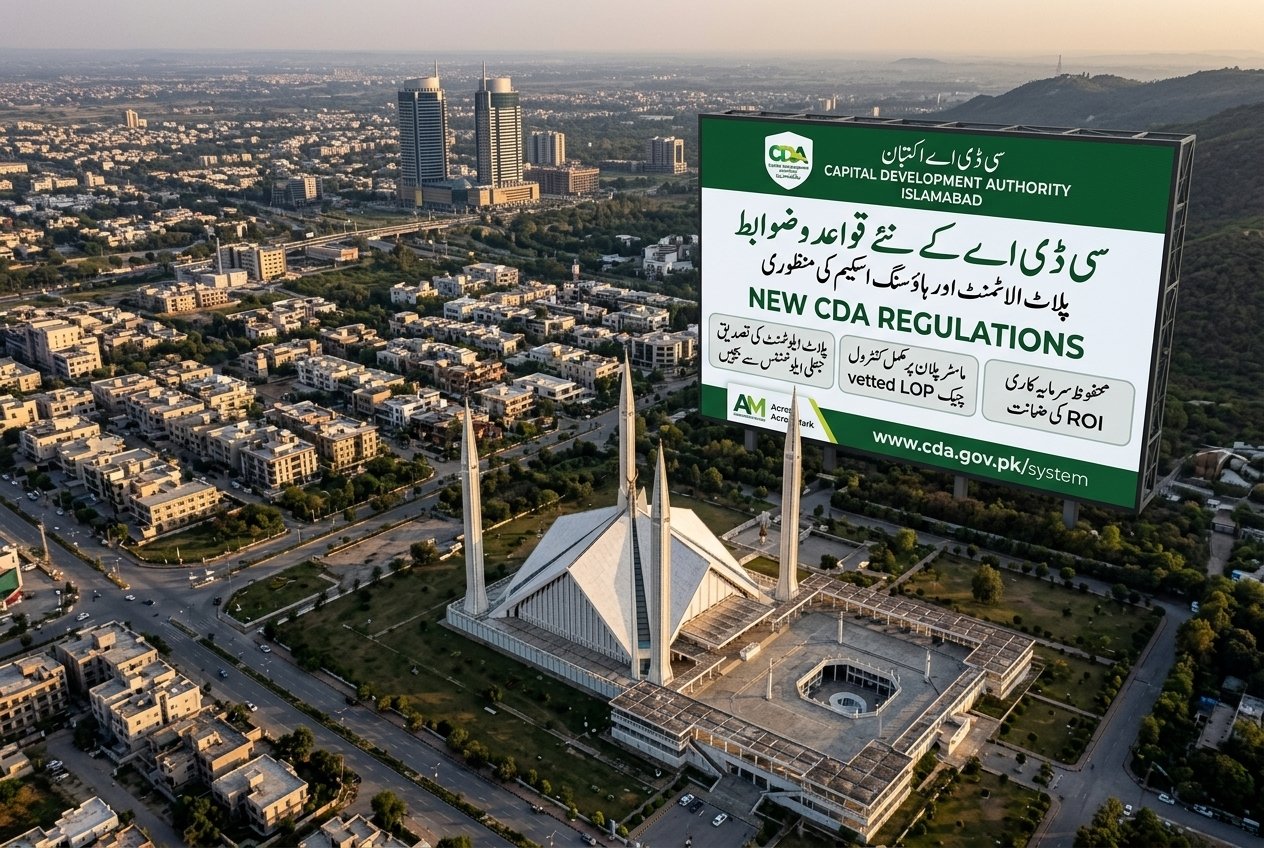
Under the new CDA regulatory enforcement, no housing society can sell a plot without direct civic vetting, ensuring that every plot sold exists within the approved layout plan.
Key Directives for Housing Societies & Allottees
The updated regulatory policy imposes concrete obligations on real estate sponsors while offering clear verification mechanisms for property buyers:
- Mandatory Plot Vetting: All allotment letters issued by housing scheme sponsors must be shared directly with CDA to regulate saleable area.
- Protection of Mortgaged Plots: Plots transferred to or mortgaged with CDA as security guarantees cannot be allotted or sold until formally redeemed by the civic body.
- Public Display of Approved LOPs: All 66 approved housing schemes in ICT are legally required to display their official CDA-approved layout plans on their websites and site offices.
- Embedded Verification QR Codes: Layout plan displays must feature direct QR codes linking buyers to CDA's official portal for real-time plot verification.
- Protection of Amenity Land: Complete ban on converting green spaces, parks, schools, and community areas into commercial or residential units.
- Strict Financial Audits: Housing society sponsors are required to share bank account details and annual financial audit reports with CDA.
Understanding LOP Approval vs. Final NOC
CDA has re-emphasized its two-tier authorization framework to clear confusion among property buyers regarding legal housing projects in Islamabad.
First, a housing scheme receives Layout Plan (LOP) Approval, which confirms spatial design and land suitability. However, legal sales and development work can only commence once the scheme secures the formal No Objection Certificate (NOC) after completing utility and infrastructure commitments.
Allottee Security
Direct vetting prevents file over-selling, guarantees physical plot existence, and protects buyer capital against unapproved land sales.
Developer Compliance
Sponsors must maintain verified allotment registers, display QR-coded layout plans, and adhere strictly to approved land boundaries.
What This Means for Real Estate Investors
For buyers and real estate investors in Islamabad, these new rules provide a crucial layer of security. Before making down payments or purchasing allotment files, buyers can now verify individual plot numbers against CDA's verified layout plans both online and at developer offices.
By enforcing plot-level verification on top of scheme-level approvals, CDA aims to restore investor confidence, streamline property records, and promote sustainable urban growth across the federal capital.